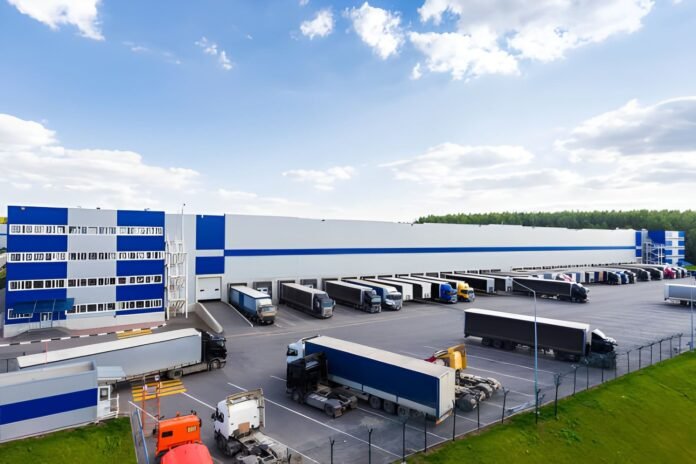
For years, residential homes and commercial office buildings dominated conversations about the property market. Today, however, another segment is attracting growing attention from investors, developers, and businesses: industrial real estate.
The continued expansion of e-commerce, advanced manufacturing, and modern logistics has significantly increased demand for warehouses, distribution centers, fulfillment hubs, and industrial parks. Companies now require faster delivery networks and more efficient supply chains, making industrial properties increasingly valuable.
As consumer expectations evolve and businesses prioritize operational efficiency, industrial real estate is emerging as one of the strongest-performing sectors in the global property market.
What Is Industrial Real Estate?
Industrial real estate includes properties designed to support manufacturing, storage, logistics, and product distribution.
Examples include warehouses, fulfillment centers, cold storage facilities, manufacturing plants, research facilities, and logistics hubs located near transportation networks.
Unlike traditional office buildings, these properties are designed to improve operational efficiency and support large-scale business activities.
The sector plays a critical role in moving goods from manufacturers to consumers.
Why Demand Continues to Grow
The rapid growth of online shopping has transformed how products move through supply chains.
Businesses now require strategically located warehouses that allow faster delivery while reducing transportation costs.
Manufacturers are also increasing domestic production in some regions to improve supply chain resilience, creating additional demand for industrial facilities.
Population growth and urban expansion are further increasing the need for efficient logistics infrastructure.
Technology Is Reshaping Industrial Properties
Modern industrial buildings are becoming smarter and more automated.
Many facilities now use robotics, artificial intelligence, warehouse management software, Internet of Things (IoT) sensors, and automated inventory systems to improve productivity.
Developers are designing warehouses with higher ceilings, energy-efficient systems, and flexible layouts to accommodate future technological advancements.
Technology is transforming industrial properties into highly efficient business assets.
Investors See Long-Term Potential
Industrial real estate has become attractive to institutional investors because of relatively stable demand and long-term leasing opportunities.
As businesses continue investing in logistics and supply chain modernization, demand for high-quality industrial properties is expected to remain strong.
Many investors also view industrial assets as an important way to diversify real estate portfolios beyond residential and office sectors.
The sector’s growth reflects broader changes in global commerce and consumer behavior.
Looking Ahead
Industrial real estate is no longer viewed as a niche segment of the property market.
Instead, it has become a vital component of modern economies that rely on fast delivery, advanced manufacturing, and resilient supply chains.
As businesses continue adapting to changing consumer expectations and technological innovation, industrial real estate is likely to remain one of the most important sectors shaping the future of global property markets.


Leave a Reply