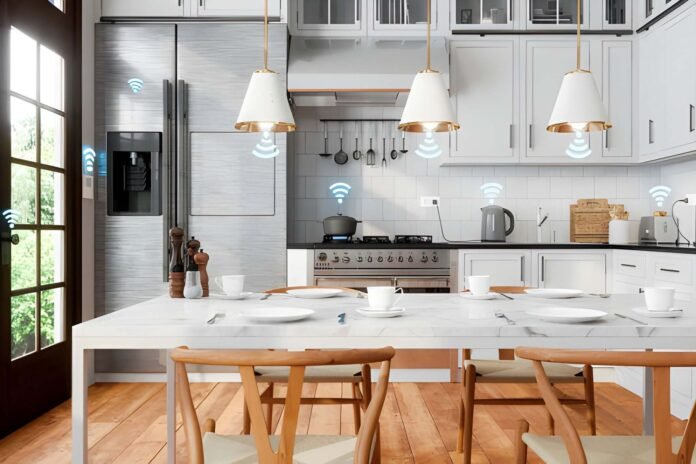
Appliances have traditionally performed specific tasks. Refrigerators kept food cold, washing machines cleaned clothes, ovens prepared meals, and air conditioners regulated indoor temperatures. Today, many of these products are becoming connected devices that can communicate with smartphones, home networks, and other technologies.
This shift is contributing to the broader growth of the smart home.
The growth of smart appliances is not simply about adding internet connectivity to household products. It is about giving everyday machines new ways to provide information, respond to users, and operate more efficiently.
What Makes an Appliance Smart?
A smart appliance generally combines traditional hardware with technologies such as sensors, internet connectivity, software, or mobile applications.
For example, a connected washing machine may allow users to select or monitor a cycle from a smartphone. A smart refrigerator may provide information about temperature or maintenance. A connected oven can offer additional controls and information through an app.
These features turn appliances from standalone machines into components of a connected home environment.
The level of intelligence varies considerably between products. Some simply provide remote controls, while others can monitor conditions and adjust certain functions automatically.
Convenience Is Driving Interest
Convenience is one of the clearest reasons consumers may consider smart appliances.
A connected appliance can provide information without requiring someone to physically inspect it. Users may receive notifications when a washing cycle finishes, check settings remotely, or monitor certain household functions while away.
These small conveniences can become particularly useful for people with busy schedules.
Instead of completely changing how households operate, smart appliances can gradually remove small tasks from everyday routines. The appeal often comes from saving time and reducing the number of things people need to remember.
Smart Appliances Can Provide More Information
Traditional appliances usually operate without telling users much about what is happening internally.
Connected models can provide additional information through displays or mobile applications. Depending on the product, users may see energy consumption, maintenance alerts, operating status, or other performance information.
This information can make household management more transparent.
For example, an appliance that alerts its owner about a maintenance issue could potentially help identify a problem before it becomes more serious. A system that provides energy information may also encourage users to pay closer attention to how household equipment is being used.
Energy Management Is Another Important Area
Energy efficiency is becoming an increasingly important consideration for households.
Smart appliances can use sensors, schedules, and connected controls to help users manage when and how appliances operate. Some connected home systems can also provide information about energy consumption.
This does not automatically mean every smart appliance uses less energy than a conventional model. The actual benefit depends on the appliance, its settings, how it is used, and the technology built into it.
However, better information and more control can give consumers additional tools for managing household energy use.
The Kitchen Is Becoming More Connected
The kitchen is one of the areas where smart appliance technology is particularly visible.
Smart refrigerators, ovens, dishwashers, coffee makers, and other connected products are increasingly designed to work with digital interfaces.
A connected refrigerator, for example, can provide information about temperature or maintenance. Smart ovens can offer additional cooking controls, while connected coffee makers may allow users to schedule preparation.
The broader trend is toward making household equipment more responsive and connected.
Connectivity Still Comes With Challenges
The growth of smart appliances also raises practical questions.
Different products may use different software platforms, apps, and connectivity systems. If devices cannot communicate effectively, consumers may end up managing several separate systems instead of having one connected home.
Security and privacy are also important considerations. Connected appliances can collect or transmit information, depending on their features. Consumers therefore need to understand what information a device collects, how accounts are protected, and what settings are available.
Smart Appliances Are Becoming Part of a Larger Ecosystem
The future of smart appliances is likely to involve greater interaction between different household technologies.
Instead of thinking about a refrigerator, washing machine, thermostat, or lighting system as completely separate products, manufacturers increasingly design them as components of a broader connected environment.
These developments reflect the broader role of AI in transforming everyday life. This could eventually make smart appliances less about individual features and more about how different devices work together.
Consumers Will Still Decide What Is Useful
Not every household needs every smart feature.
A connected appliance may be valuable if its features solve a genuine problem, save time, provide useful information, or improve control. Another consumer may prefer a simpler product without an app or internet connection.
That means the growth of smart appliances does not necessarily mean traditional appliances will disappear. Instead, consumers are likely to have more choices between basic products and increasingly connected alternatives.


Leave a Reply