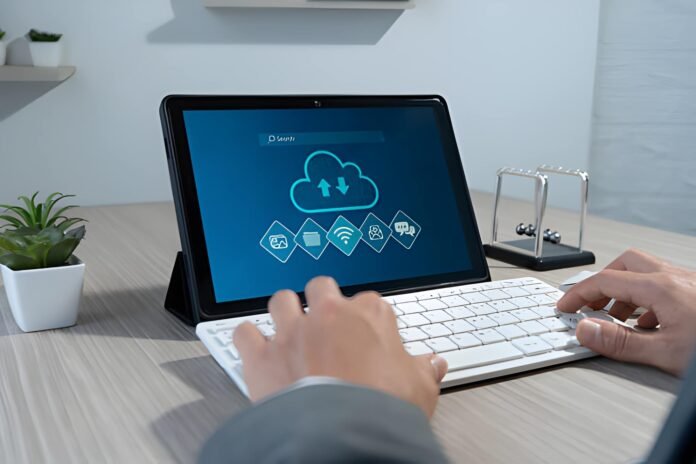
For more than a decade, the future of technology seemed clear: everything would move to the cloud. From productivity tools to personal data, cloud-based software promised speed, scale, and convenience. But a subtle reversal is underway.
Across industries, developers and companies are shifting more computing power back to local devices reshaping how software is built, secured, and experienced.
The Limits of an Always-Online World
Cloud computing transformed global technology, but it also introduced vulnerabilities. Outages, latency issues, privacy concerns, and rising subscription costs have exposed the downsides of full cloud dependence.
Users now expect software to work instantly even offline. Businesses, meanwhile, are rethinking how much critical data should rely on distant servers.
What “Local-First” Software Means
Local-first software prioritizes running core functions directly on the user’s device while syncing selectively with the cloud. This approach allows:
- Faster response times
- Offline functionality
- Greater data ownership
- Reduced server costs
Rather than abandoning the cloud, companies are redefining its role from primary engine to backup and synchronization layer.
Why This Shift Is Accelerating Now
Several converging trends are pushing this movement forward:
- Improved hardware: Modern laptops, phones, and chips are powerful enough to handle complex tasks locally
- Privacy regulations: Governments are tightening data-protection laws
- Rising cloud costs: Storage and compute expenses are squeezing margins
- Security concerns: Decentralized data reduces breach exposure
Developers increasingly view local execution as both a performance and trust advantage.
Industries Leading the Change
This shift is especially visible in:
- Productivity software
- Creative tools
- Enterprise analytics platforms
- Secure communication apps
Even consumer-facing applications are highlighting offline capability as a premium feature once considered obsolete.
What This Means for Users
For users, local-first technology delivers:
- More control over personal data
- Fewer service disruptions
- Better performance on weaker connections
It also challenges the assumption that innovation must always be cloud-native.
The Business Implications
For tech companies, this transition alters revenue models. Subscription-only pricing faces pressure as users demand ownership and transparency. Companies must balance scalability with trust an increasingly valuable currency.
Tech analysts suggest hybrid models will dominate the next decade, blending local power with selective cloud benefits.
Local Computing
Technology trends often move in cycles. The return to local computing reflects a broader realization: efficiency isn’t just about centralization it’s about resilience.
As digital ecosystems mature, software may finally be learning to work with users, not around them.


Leave a Reply