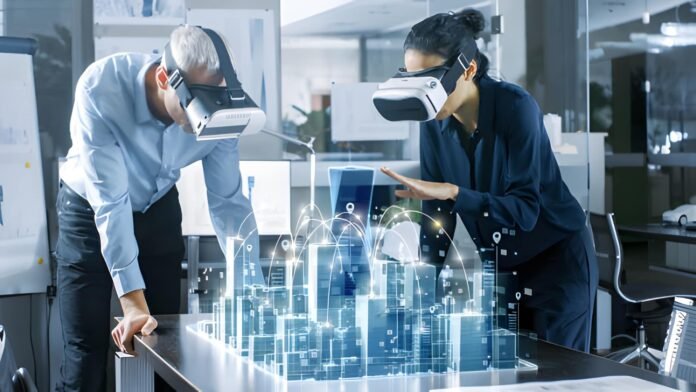
A powerful new technology is quietly reshaping industries, cities, and even global decision-making and it’s happening faster than most people realize. Digital twins, once considered a niche engineering tool, are now becoming one of the most influential tech trends as companies use hyper-realistic digital replicas to experiment, optimize, and predict real-world outcomes.
From manufacturing to healthcare to smart cities, digital twins are transforming how organizations innovate while lowering cost, improving safety, and accelerating development cycles.
What Exactly Are Digital Twins?
A digital twin is a virtual replica of a physical object, process, or environment. Using real-time data, sensors, AI, and simulation models, digital twins mirror reality with extraordinary accuracy.
These twins are now being used to model:
- Factories
- Power grids
- Aircraft engines
- Construction projects
- Human organs
- Traffic systems
- Retail stores
- Even entire cities
As technology advances, digital twins are no longer static 3D models they are dynamic systems that adapt and evolve with real-world data.
Why They’re Exploding in Popularity
- Real-Time Problem Solving – Digital twins allow companies to test strategies virtually before applying them in the real world. Engineers can detect failures before they happen, cities can simulate disasters, and hospitals can rehearse complex surgeries.
- Massive Cost Savings – Instead of building physical prototypes which can cost millions companies can run simulations instantly. Industries report 20–40% reductions in operational costs when using this technology.
- Smarter Urban Planning – Governments are now using digital twins to design efficient traffic flows, energy grids, and infrastructure expansion plans reducing congestion, pollution, and risk.
- AI + IoT Integration – The rise of edge computing, IoT devices, and AI-powered analytics is fueling the rapid adoption of digital twin systems.
- Sustainability Benefits – Companies can measure environmental impact, optimize energy usage, and reduce waste before implementing policies.
Industries Being Transformed
- Manufacturing – Factories simulate production lines, reduce downtime, and optimize workflow efficiency.
- Smart Cities – Urban planners use digital twins to improve public transport, emergency response, and zoning decisions.
- Aviation – Engineers predict engine failures and improve aircraft safety.
- Healthcare – Doctors can simulate organ functions, test drug interactions, or rehearse surgeries without risk.
- Energy – Electric grids use digital twins to prevent outages and stabilize renewable power sources.
- Real Estate & Construction – Developers model buildings, airflow, materials, and energy consumption before construction begins.
Are Digital Twins the Future of Everything?
Experts believe the future will be shaped by the “twin economy”, where nearly every major physical system has a digital counterpart.
In the coming years, we may see:
- Digital twin cities connected globally
- Personal digital twins for health monitoring
- Fully virtual supply chains
- Real-time planetary climate twins

Leave a Reply