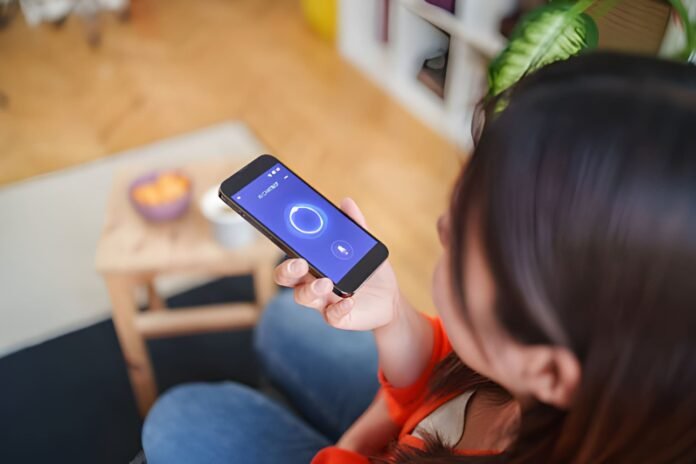
For years, using technology meant typing on a keyboard, clicking a mouse, or tapping a screen. Today, people can increasingly interact with devices simply by speaking.
Voice assistants have become an important part of this shift. From smartphones and smart speakers to cars and connected home devices, voice technology is creating new ways for people to search for information, control devices, manage tasks, and access digital services.
The rise of voice assistants reflects a broader change in technology: computers are becoming easier to interact with through natural language.
What Are Voice Assistants?
Voice assistants are software systems that use speech recognition and artificial intelligence to understand spoken requests and provide information or perform actions.
Users can ask questions, set reminders, play music, check information, control compatible devices, or complete other tasks without manually navigating through menus.
Assistants such as Siri, Alexa, and Google Assistant helped make voice interaction familiar to millions of users.
Why Voice Technology Is Becoming More Popular
One of the biggest advantages of voice interaction is convenience.
Speaking can be faster than typing in certain situations, particularly when people are cooking, driving, exercising, or carrying out another activity that makes using a screen inconvenient.
Voice assistants can also make technology more accessible for people who have difficulty using traditional interfaces.
As voice recognition and language-processing technology improve, interacting with devices can feel increasingly natural.
Voice Assistants Are Expanding Beyond Smartphones
Voice assistants are no longer limited to phones.
Smart speakers brought voice-controlled technology into homes, allowing people to perform tasks such as playing music, setting timers, answering questions, and controlling connected devices.
Today, the concept extends to cars, televisions, headphones, appliances, and other connected devices.
This creates the possibility of interacting with technology without constantly reaching for a screen.
Smart Homes Are Helping Drive Voice Adoption
Connected homes are another major area where voice assistants are useful.
Instead of opening separate applications, users can potentially control compatible lights, thermostats, entertainment systems, and other devices through spoken commands.
As more household products become connected, voice assistants can serve as a convenient layer between people and their technology.
The long-term goal is a home where different devices can respond naturally to the same user.
Voice Is Changing Digital Interaction
The importance of voice assistants goes beyond convenience.
Traditional interfaces require users to understand how an application works. Voice interfaces can allow people to describe what they want in ordinary language.
This represents a significant change in the relationship between humans and computers.
Rather than learning where a feature is located, users can simply ask for an action or piece of information.
Businesses Are Exploring Voice Technology
Businesses are also finding uses for voice interfaces.
Voice technology can support customer service, information systems, accessibility tools, and hands-free workplace applications. Companies can use voice-based systems to help customers find information or complete simple tasks without navigating complicated interfaces.
For businesses, the attraction is not simply having a voice feature. The real opportunity is creating faster and more convenient interactions.
Challenges Still Remain
Despite its progress, voice technology is not perfect.
Assistants can misunderstand accents, background noise, unusual phrases, or complex requests. Privacy is another important consideration because voice-enabled devices may involve microphones and the processing of spoken information.
Improving accuracy, privacy controls, and transparency will therefore be important as voice technology becomes more widespread.
The Future of Voice Assistants
The next generation of voice assistants could become more conversational and context-aware.
Instead of responding only to isolated commands, future systems may be better at understanding previous interactions and the user’s broader intention.
This could make voice assistants less like simple command tools and more like interfaces connecting people with multiple digital services.
The rise of voice assistants is ultimately part of a larger transformation in computing. As technology becomes more capable of understanding ordinary language, speaking to computers may become as normal as tapping a screen.


Leave a Reply