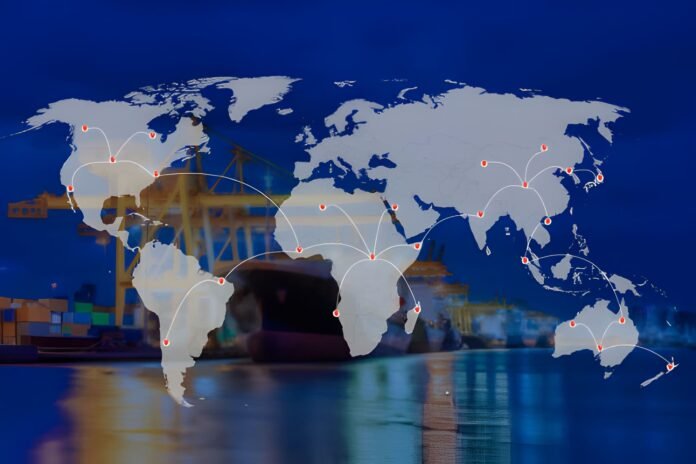
Global supply chains, once defined by efficiency and low-cost production, are now undergoing one of the biggest transformations in decades. Amid geopolitical tensions, trade restrictions, and shifts in manufacturing priorities, companies are moving from heavily centralized supply models to more regionalized and diversified networks.
Economists warn that this fragmentation could reshape global growth patterns, corporate strategy, and long-term competition among major economies.
A New Era of “Reshoring,” “Friendshoring,” and Regional Hubs
Countries that once relied on a single manufacturing base primarily China are now adopting diversified strategies. Businesses are spreading production across Southeast Asia, India, Eastern Europe, and Mexico to reduce political and logistical risks.
Some industries are even bringing production back home. Reshoring incentives in the U.S., Japan, and parts of Europe have triggered major investment in domestic factories, clean-energy infrastructure, and semiconductor plants.
Economists call this shift the rise of the multi-hub global economy, where no single region dominates production.
Why Companies Are Redesigning Entire Supply Networks
The global economy is being reshaped by several major pressures:
- Geopolitical tensions and trade wars
- Higher transportation and shipping volatility
- Rising energy prices
- Global demand for faster delivery
- Corporate pressure to reduce carbon emissions
- Risk of production shutdowns due to climate events
In response, companies are investing in flexible supply networks that reduce dependency on any one region or resource.
The Economic Impact: Higher Prices, New Market Opportunities
Fragmentation is expected to increase production costs. Goods that were once cheaply manufactured abroad may become more expensive. Consumers may see higher prices in electronics, vehicles, construction materials, and household appliances.
But economists say the shift also creates new opportunities:
- More investment in developing economies
- Growth in cross-border logistics and warehousing
- Expansion of regional manufacturing clusters
- Job growth in automation, robotics, and advanced supply chain tech
Technology Is Becoming the Backbone of Modern Supply Chains
To manage increasingly complex networks, companies are deploying advanced tools such as:
- AI-driven demand forecasting
- Digital twins for supply chain simulation
- Blockchain for real-time item tracking
- Robotics to reduce factory labor shortages
- Automated distribution systems
This transformation is reducing downtime, improving resilience, and creating faster responses to global disruptions.
A More Resilient but More Expensive Global Economy
Economists agree that the world is moving away from the old era of ultra-efficient, low-cost supply chains. What’s emerging is a more resilient, diversified, and technology-driven system and this shift will shape the global economy for years.
While the transition may lead to higher short-term costs, the long-term benefits include greater economic stability, reduced risk, and stronger regional development.


Leave a Reply